


The Panchabhuta Retreat
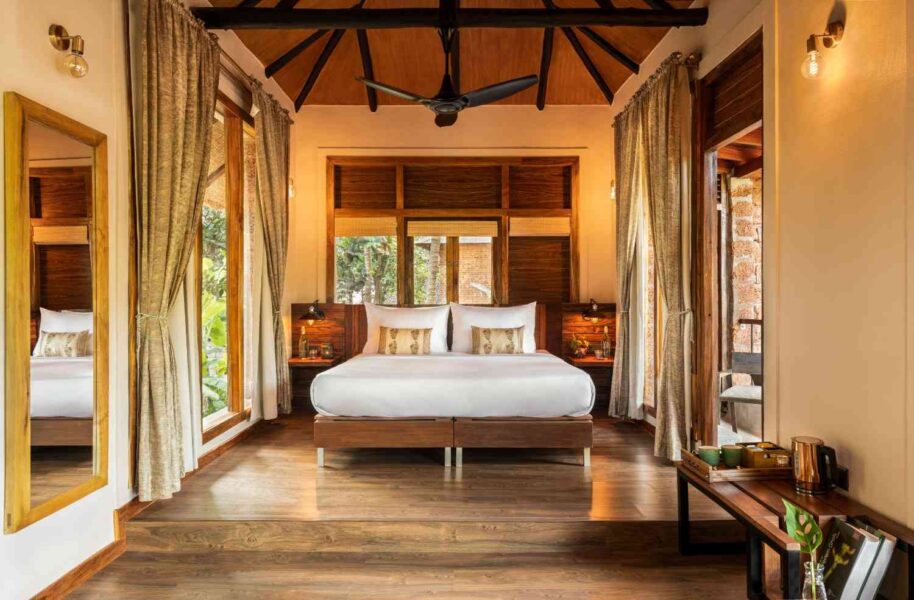
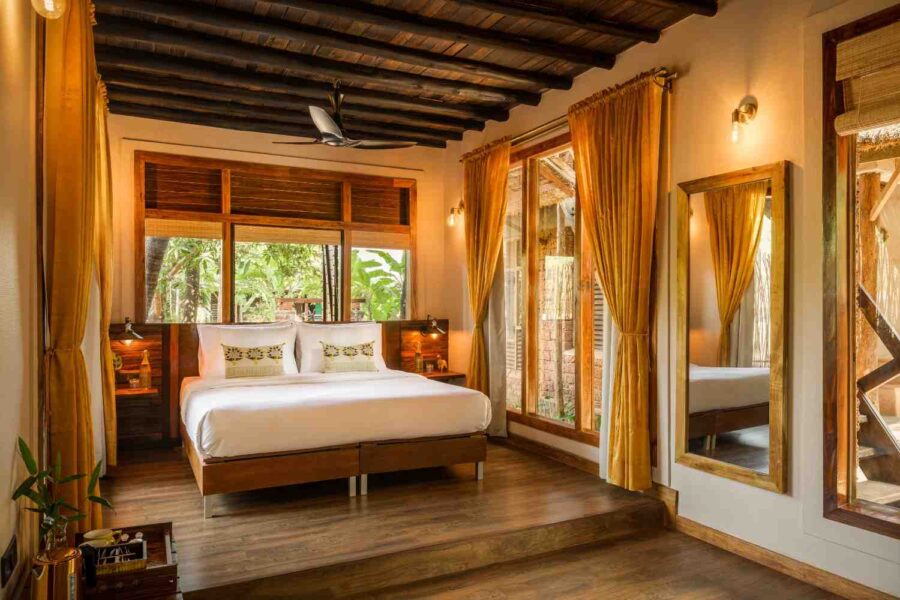
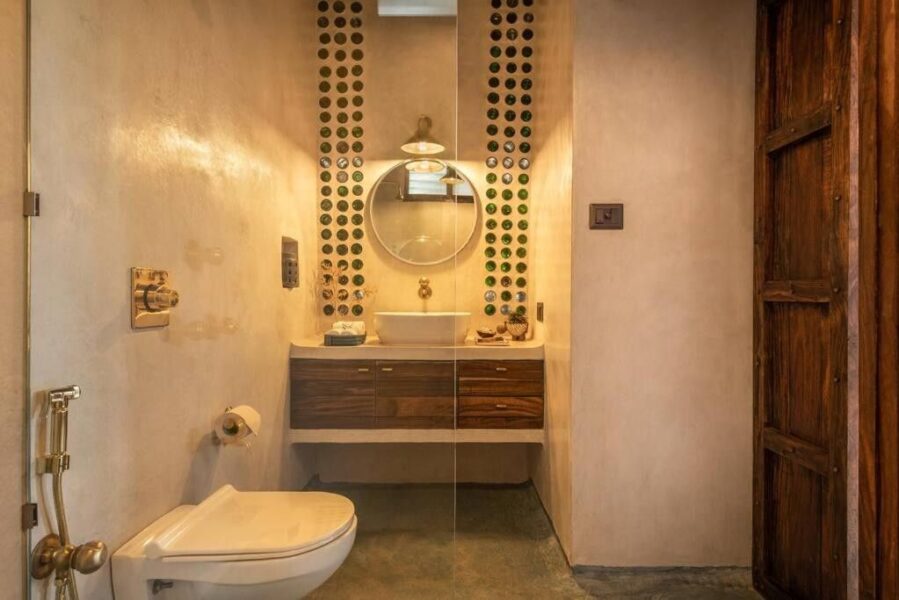
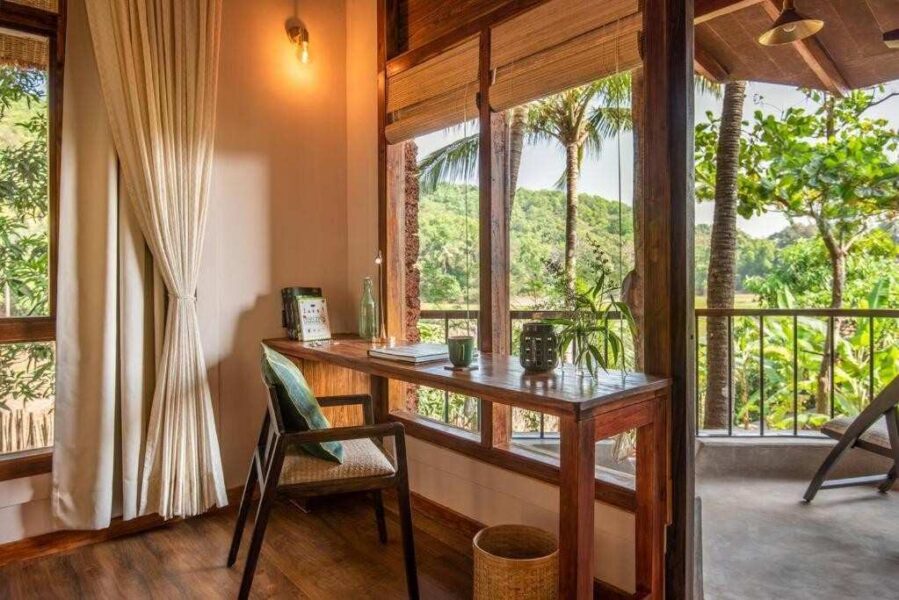
At Panchabhuta Retreat, renewable energy is not a feature bolted onto an existing structure — it is the foundation the retreat was built upon. Nestled at the Aghanashini estuary along the Western Ghats, the retreat operates entirely on solar power, using the same sun that rises over the estuary each morning to light every room, power every meal, and keep every guest cool — without a single diesel generator or air conditioning unit. The architecture carries the energy logic deeper. Reclaimed teak, laterite stone, woven cane walls, and areca palm work together to keep interiors naturally cooler than the outside air. Thick walls absorb heat. High ceilings release it. The estuary breeze does the rest. This is not engineering workaround — it is building in harmony with the climate, the way the land has always known how. The retreat is also entirely plastic-free. Every material that enters the site is chosen with the same care as the energy that powers it. Together, these choices describe a place in genuine ecological balance: a business whose success depends on the health of the ecosystem it inhabits, and which therefore reinvests — structurally and daily — in protecting it.
Protecting the Aghanashini Estuary
The Aghanashini estuary, just steps from the retreat, is one of India's most ecologically rich coastal ecosystems. Its tidal rhythms support nursery grounds for marine species, the livelihoods of over 6,000 local fishermen, and habitats found nowhere else on the Karnataka coast. Every energy and waste decision at Panchabhuta Retreat is made with the health of this water in mind.
Rooted in the Western Ghats
The Western Ghats — one of the world's eight biodiversity hotspots — form the backdrop and the reason for Panchabhuta Retreat. The forests here feed the rivers that give the retreat's four rooms their names: Kali, Gangavali, Aghanashini, Sharavati. Protecting what grows here is not separate from running the retreat. It is the retreat's founding purpose.
Renewable energy at Panchabhuta is one part of a living system — a site where the architecture, the sourcing, the materials, and the philosophy are all aligned toward the same end: to exist within the landscape without diminishing it, and to leave every guest with a deepened sense of what that commitment looks like in practice.
What Makes This Different?
There is a particular kind of environmental theatre in hospitality — a solar panel on the roof of a resort that otherwise ignores its surroundings, a recycling bin in a lobby built on cleared forest. Panchabhuta Retreat is a deliberate departure from that pattern. Sustainability here was not introduced as a marketing feature. It was the condition under which the retreat came into existence. The result is a guest experience that feels genuinely lighter — not because comforts have been stripped away, but because the site itself was designed to need less, take less, and return more.
Solar-Powered Living
-
100% solar energy — no grid dependency, no generators -
Passive cooling through traditional building techniques -
Zero plastic — site-wide, from construction to daily operations -
Reclaimed and natural materials: teak, laterite, cane, areca palm
Architecture as Energy Strategy
-
Rooms named for Western Ghats rivers: Kali, Gangavali, Aghanashini, Sharavati -
Thick laterite walls regulate temperature without mechanical cooling -
Cross-ventilation designed around the estuary breeze -
Every structure built to belong to the landscape, not interrupt it